If you’re a seasoned member of your local Pilates Studio, you may already be familiar with the changes you experience in your body after consistently practicing Pilates. Back pain that was once an everyday struggle has now faded, allowing you to perform daily functions easily. Perhaps you never realized how difficult it was for you to put on socks until it stopped being difficult.
In fact, Harvard calls one’s ability to put on socks standing up without external support the “Old Man Test”. While the nature of this supposed test is unserious, it can actually be a low-effort indicator of one’s general health. Putting on socks unassisted indicates good balance, strength, flexibility, and mind-muscle connection.
Unfortunately, as we get older, many people struggle to keep up with a physical routine. Whether it be an office job, a sedentary lifestyle, or burnout, many of us can fall into the trap of losing our mobility as we move further into adulthood. This can even lead to new health issues, such as arthritis, which impact our quality of life and even our longevity.
If you experience these issues, know that you are not alone. However, this is not simply a fact of life that we have to accept; most of these problems can be improved with a consistent Pilates practice. Even though the ideal form of exercise differs for everyone, the data agrees that Pilates increases mobility, subsequently increasing overall longevity.
Healing Through Pilates
Physical therapy as we know it today began its development during the early 20th century. As industrialization began to advance, so did scientific technology. This coupled with the devastation of World War 1 necessitated innovations in the way veterans were rehabilitated.
As many people in the fitness community already know, Pilates was developed for the purpose of providing a new form of physical therapy for veterans of WW1. Its primary goal was to reintroduce the body to movement, allowing injured people to minimize their pain and improve their quality of life.
Joseph Pilates was not a formal scientist or expert, but he was an experienced athlete that had been developing a new low-impact exercise program. When the first world war began, he was mistaken as an enemy alien and placed in an internment camp. It was in this camp that he got the chance to teach injured soldiers the program which would eventually morph into Pilates as we know it today.
What stood out about Pilates’ exercise program was that it was designed to be completed lying down, allowing even those with severe injuries in hospital beds to participate. Furthermore, the exercises were low impact, promoting gradual improvement in mobility. As Joseph Pilates once said,
“Change happens through movement and movement heals.”
This quote can apply to any form of exercise, but it was undoubtedly the thought process that Pilates used to inspire his invention. If change happens through movement, then it is possible to heal through movement. It is in this context that we examine how Pilates can enhance longevity.
Modern-Day Pilates Impact
These original workouts morphed into what is now known as Pilates Reformer. It is even true in the modern day that most people start Pilates to recover from sustained injuries. However, Pilates benefits people of all ages, sizes, and fitness levels.
Starting Pilates at a younger age can act as a preventative measure for future injuries, especially in sports. Pilates emphasizes the mind-muscle connection in all workouts, making people more aware of their body’s limits. Additionally, Pilates teaches you how a movement should feel and how to make that happen.
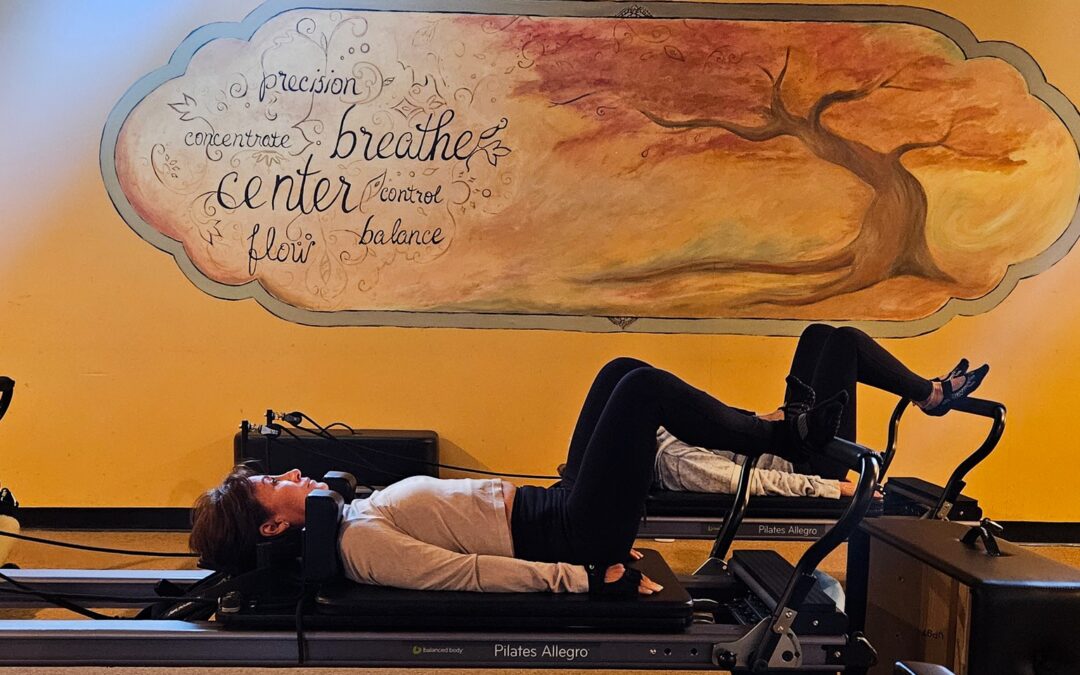
Mind-muscle connection is perhaps the most important aspect of Pilates. The Pilates Reformer is essentially designed to support this connection, which leads to more control over the body in everyday life. Many reformer workouts rely on the use of fabric loops, held either by hands or feet, to magnify sensations in a given part of the body.
The fabric loops act as a system of support for movements on the Reformer. They provide a combination of assistance and challenge, allowing participants to make progress according to their level. Most importantly, this support teaches the body how to move in the most sustainable manner.
Sustainable movement means increasing flexibility and strength with the least amount of physical risk. This doesn’t mean that every exercise is going to be easy, in fact the effort of the mind-muscle connection often makes movement more difficult! Reducing physical strain requires more intentional thought and awareness of how the body is feeling. Pilates is just as much of a mental workout as it is a physical one.
So where does longevity fit into all of this? It is true that we don’t have support systems like fabric loops on the Reformer in our normal lives. However, once you have done Pilates for long enough, you find that you do not need support to know how a movement is supposed to feel.
An increased awareness of your daily movements prevents physical accidents, like trips and falls, and reduces risk of injury in sports. This coupled with the resistance training that is integral to Pilates means that you are building muscle and making yourself more resilient.
Awareness can even be impactful in situations where you’re not thinking about your movement. Whether you’re sitting in an office or lifting boxes in a warehouse all day, Pilates can teach you how to correct your posture or lift in the most effective way. This can combat one of the most common issues we face: back pain.
Lastly, as your mind-muscle connection increases, so too will your mobility, endurance, and strength. These are all the things your body needs to live a long, happy, and healthy life. To leave off, here’s another quote from Joseph Pilates:
“You are only as young as your spine is flexible.”
Sources
Try this: The “old man” test – Harvard Health
171 Top Joseph Pilates Quotes (with Explanation) – Life Success Journal